
Best Protective Styles for Fine 4A, 4B, and 4C Hair (Ranked by Tension Risk)
Not every protective style protects fine strands. Here are the safest options, the risky ones, and the ones to skip entirely.
Protective styling should let your hair rest. On fine strands, the wrong install does the opposite — it hangs weight on the finest hair you own until it gives out at the edges and nape.
Low tension risk — safest for fine strands
- Two-strand twists on your own hair, no added weight.
- Banding to stretch without heat.
- Loose low buns placed two inches behind the hairline.
- Flat-twisted styles with a satin cap under a wig.
Moderate risk — fine with strict rules
- Knotless braids with small, lightweight hair, capped at 6 weeks.
- Crochet styles on a low-tension braid base.
- Sew-ins with a proper braid pattern and no perimeter tension.
High risk — skip or book a certified professional
- Knotted box braids on fine strands.
- Micro braids or heavy waist-length installs.
- Glued lace fronts worn back-to-back.
The maintenance rules that matter more than the style
- No pain. If it throbs, it's too tight — loosen before you leave the chair.
- Mist braids weekly with diluted leave-in and seal with a light oil.
- Two weeks of rest between installs, always.
Protective is a verb. The style only protects if you maintain it.
Not sure which tier your hair can handle? The free guide walks you through it, and the Duplan Method™ page explains the tension pillar in full.
Was this helpful?
Let Val know, share it with a friend, and save it for your next wash day.
Have a question about your own strands?
Ask Val — the free fine-hair assessment helps her point you to the care your hair actually needs.
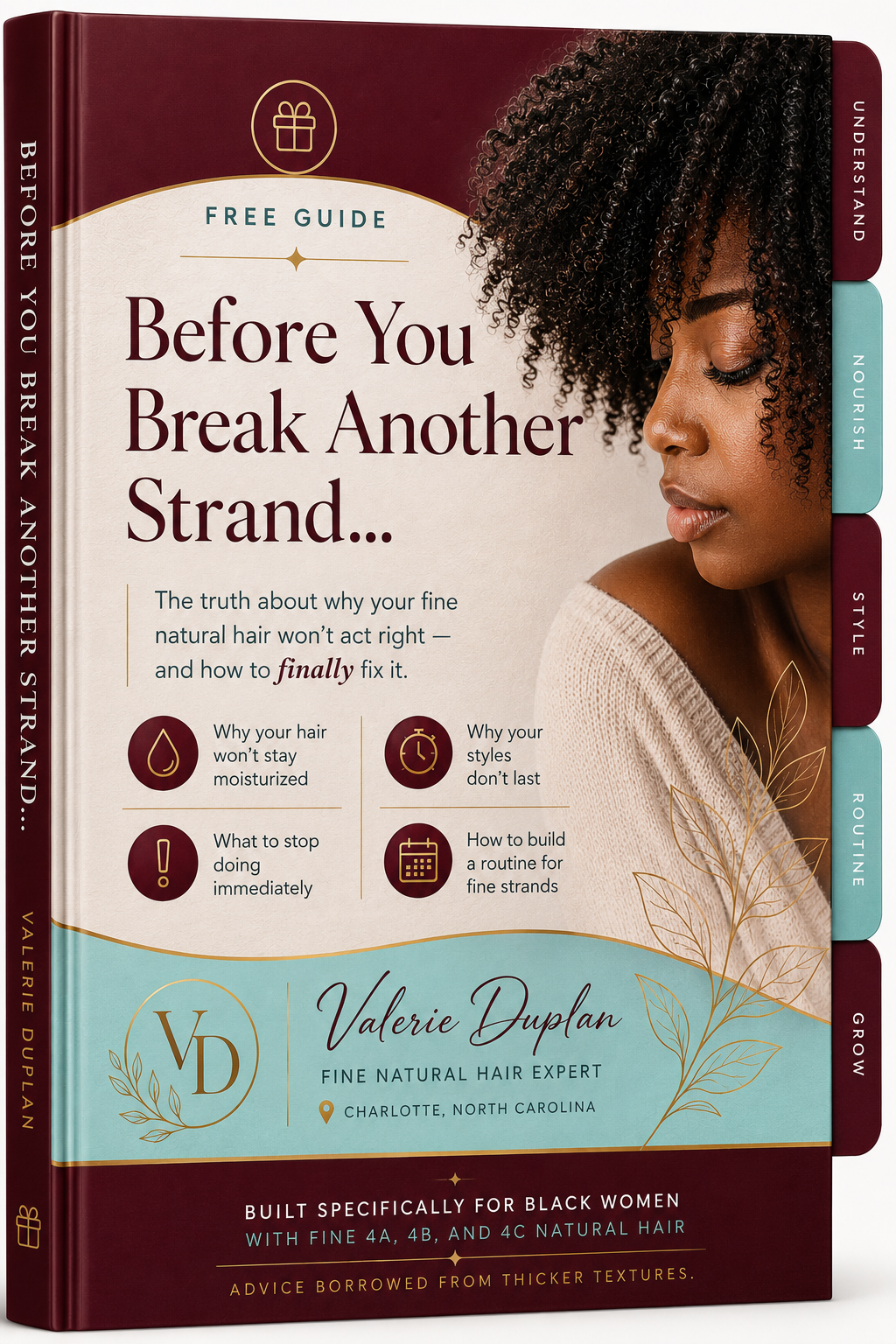
Free download
Struggling with fragile fine hair?
Get Val's free guide to stop chronic breakage — what to stop doing this week, and the first three moves that keep your length. Enter your email and it lands in your inbox.
No spam. Unsubscribe anytime.