A Low-Tension Twist Updo for Fine Natural Hair: Style Without Breakage
See what makes a twist updo work for fine natural hair, from balanced volume and gentle placement to nighttime care and a safe takedown.
Style in motion
Balanced shape. Gentle placement.
A short portrait video of Valerie turning slightly to show the shape, side volume, and placement of her twist updo on fine natural hair.
The best fine natural hair styles do more than look polished. They work with the amount of hair you have, protect delicate strands, and avoid pulling at the hairline. This low-tension twist updo creates balanced volume without relying on a tight base or heavy added hair.
The short video shows the finished shape from more than one angle. It is a style example, not a step-by-step tutorial, so use the guidance below to decide whether a similar updo is a good match for your own strands.
Why this twist updo works for fine natural hair
Fine strands can look overwhelmed when a style uses too much product, too much added hair, or one heavy section at the crown. A balanced updo spreads the shape across the head. Fuller side twists and compact top sections create presence without making one area carry all the weight.
- The base should feel secure, never tight or sore.
- Each section should match the density of the hair supporting it.
- Lightweight hold is usually enough; heavy gels can make fine twists stiff and fragile.
- Pins should anchor into the style, not scrape or press into the scalp.
How to style fine natural hair without hiding its real density
The goal is not to force fine hair to imitate thick hair. Work with the natural density instead. Soft, offset parts can reduce visible scalp lines. Gently opening each finished twist adds shape, while placing sections toward the sides keeps the silhouette balanced from the front and profile.
A beautiful style should respect what your strands can carry. — Val
Watch for these tension warning signs
Take the style down or loosen it if you feel throbbing, sharp pulling, tenderness, or a headache. Small bumps around the hairline are another warning. A protective style is only protective when your scalp feels calm and your edges can move naturally.
Protect the style at night
- Use a roomy satin bonnet or scarf that does not press the twists flat.
- Avoid re-pinning the same spot every morning.
- Smooth flyaways with damp fingertips and a small amount of light hold instead of layering more product.
- If the base begins to pull as the style shifts, take it down rather than tightening it again.
Take it down as carefully as you put it up
Remove every pin before separating the twists. Add a little slip to your fingertips, unwind from the ends upward, and pause when you meet a snag. Rushing the takedown can undo the benefit of several low-manipulation days in just a few minutes.
When to choose another style
Skip an updo when your scalp is already tender, your edges are recovering, or your hair is shedding more than usual. A loose twist-out, tucked style, or satin-lined headwrap can give your strands a break without adding concentrated tension. No single hairstyle guarantees growth; consistent low-tension care is what helps you hold on to the length you grow.
If you are unsure what your strands can handle, take the free fine-hair assessment. It will help you identify the care patterns that deserve your attention before your next style.
Was this helpful?
Let Val know, share it with a friend, and save it for your next wash day.
Have a question about your own strands?
Ask Val — the free fine-hair assessment helps her point you to the care your hair actually needs.
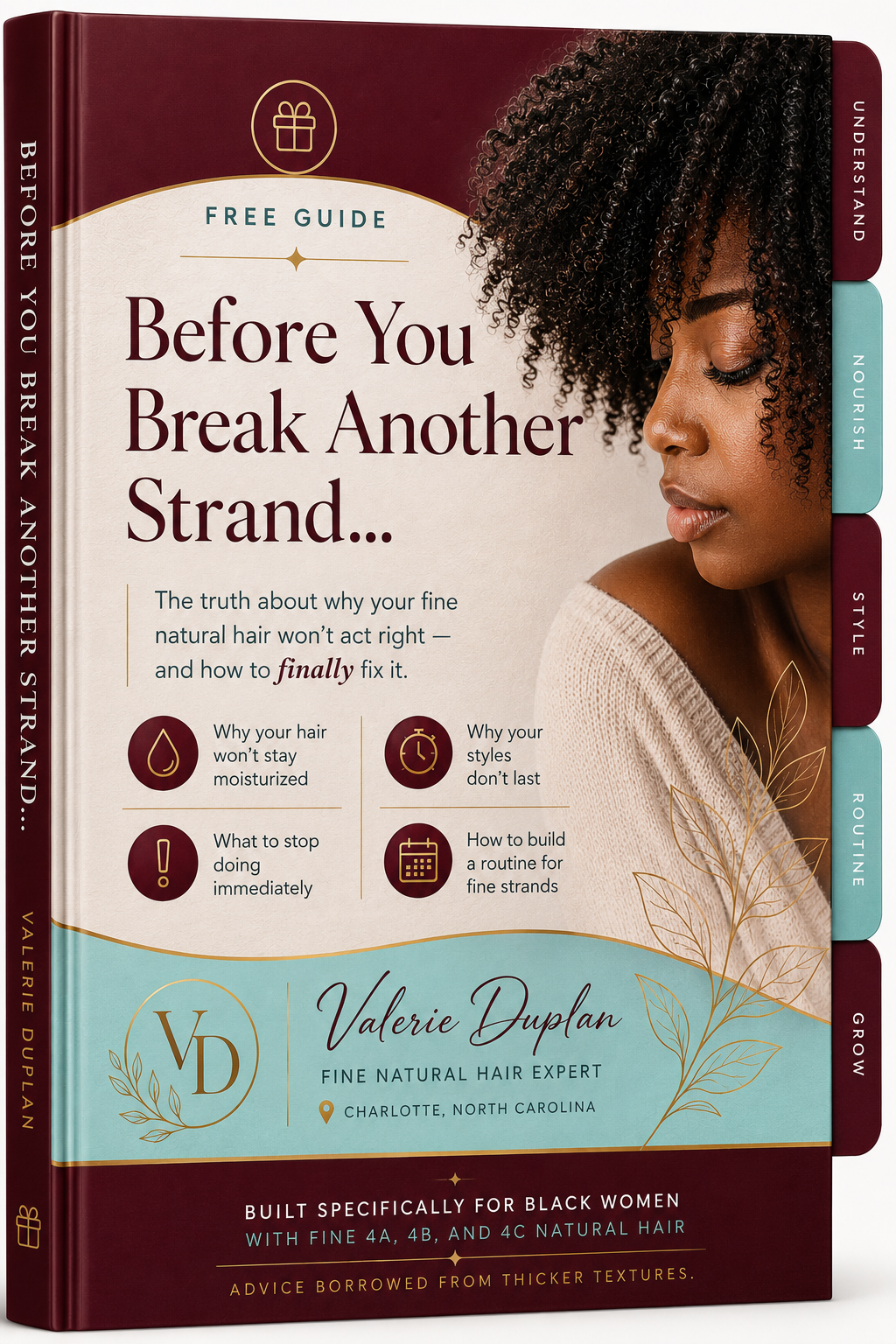
Free download
Struggling with fragile fine hair?
Get Val's free guide to stop chronic breakage — what to stop doing this week, and the first three moves that keep your length. Enter your email and it lands in your inbox.
No spam. Unsubscribe anytime.