Fine Natural Hair vs Coarse Natural Hair: How to Tell and Why It Changes Everything
Strand width — not curl pattern — decides which products work. Here's the 60-second test, plus the routine differences between fine and coarse natural hair.
Two women can both be 4C and need completely opposite routines. The difference isn't the curl pattern on the chart — it's the width of a single strand.
The 60-second test
- Pull one shed strand and lay it beside a piece of sewing thread.
- Thinner than the thread = fine. About the same = medium. Noticeably thicker = coarse.
- Roll it between your fingers: barely felt = fine, clearly felt with texture = coarse.
What fine strands need
- Water-based leave-ins, applied in thin layers.
- Light oils — jojoba, grapeseed, argan.
- Fewer wash-day steps and less daily handling.
- Protein every 4 weeks to hold structure.
What coarse strands need
- Heavier butters and creams that actually penetrate.
- More moisture, more often, and longer deep-conditioning time.
- Stronger slip for detangling.
- Less frequent protein — coarse hair stiffens fast.
Why the wrong match causes breakage
Put a coarse-hair butter on fine strands and you get limp, greasy hair that snaps under its own weight. Put a fine-hair mist on coarse strands and you get chronic dryness. Same shelf, wrong strand.
We don't follow trends. We understand strands.
That's Pillar 2 of the Duplan Method™ — Match Products to Strand, Not Trend™. Read the full five-pillar system on the Duplan Method™ page.
Was this helpful?
Let Val know, share it with a friend, and save it for your next wash day.
Have a question about your own strands?
Ask Val — the free fine-hair assessment helps her point you to the care your hair actually needs.
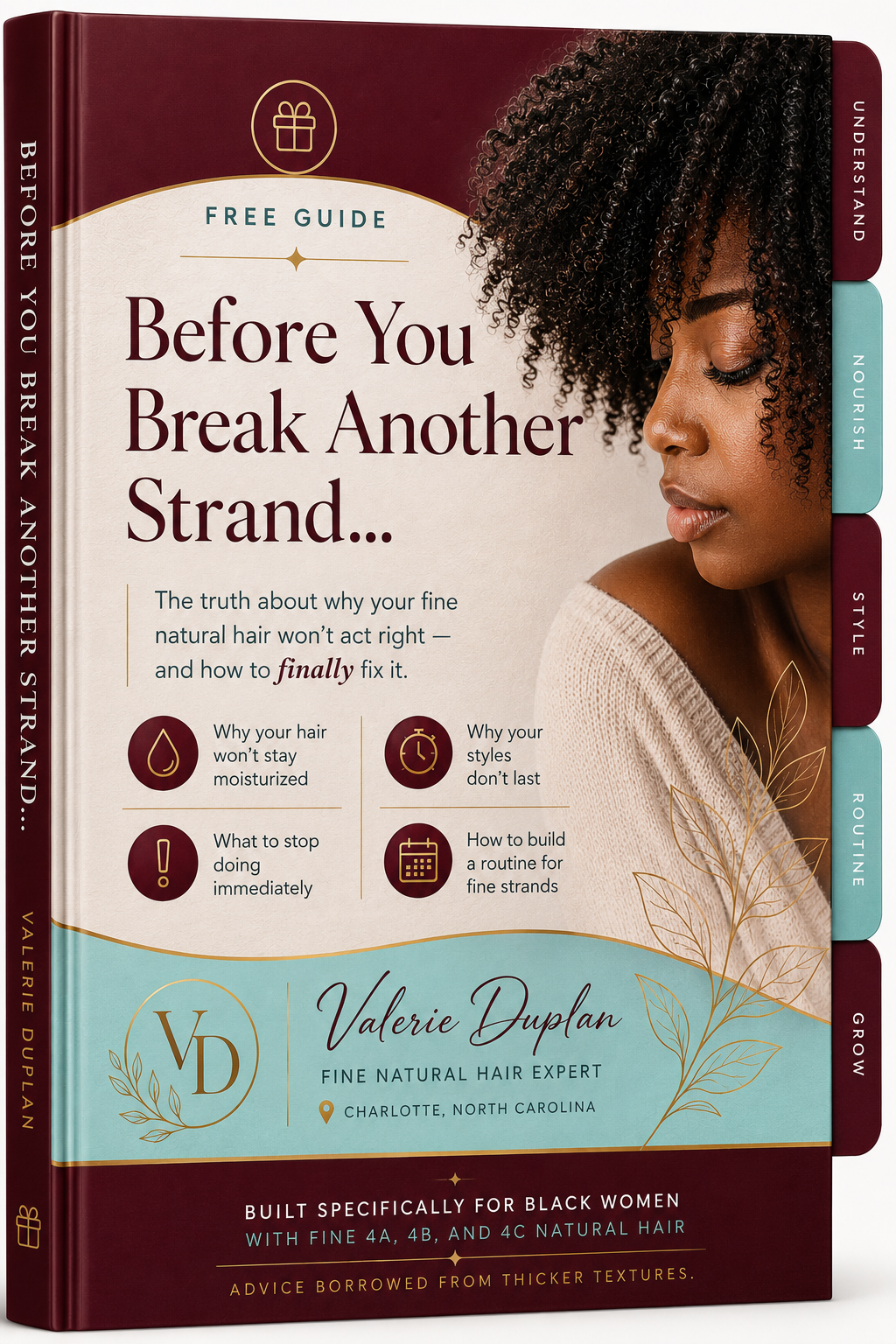
Free download
Struggling with fragile fine hair?
Get Val's free guide to stop chronic breakage — what to stop doing this week, and the first three moves that keep your length. Enter your email and it lands in your inbox.
No spam. Unsubscribe anytime.